
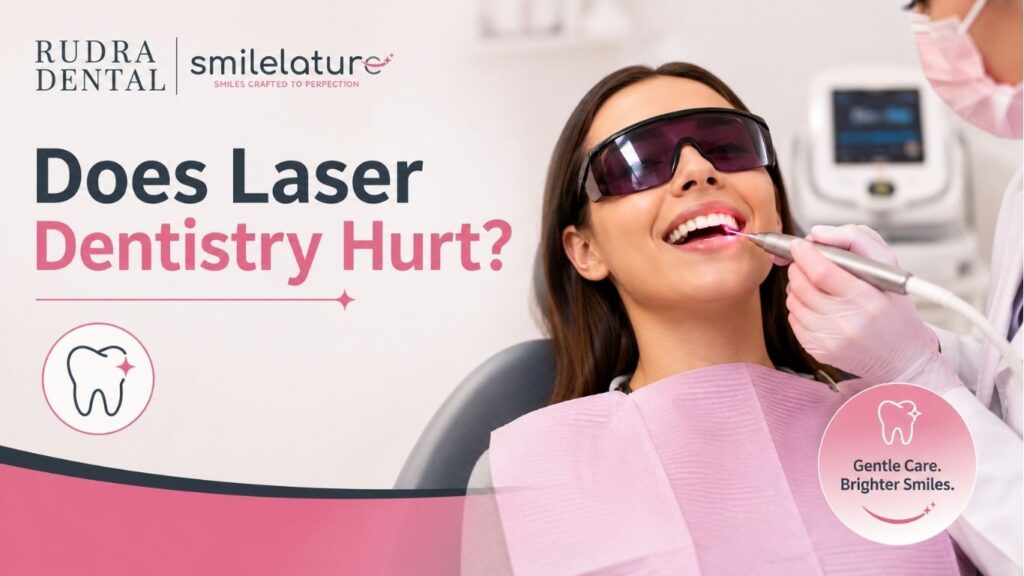
The number one reason patients procrastinate on going to the dentist is fear of pain. If you find yourself wondering if laser dentistry hurts before making your appointment, know that you’re not alone. Let’s examine what really happens during a laser dental treatment and why it’s so different from getting drilled.
Why Do People Assume Laser Treatment Hurts?
The term “laser” itself doesn’t conjure thoughts of pain relief. It’s sharp, sterile sounds. It’s easy to think heat, burning, or sting. Factor in years of anxiety from hearing the dreaded dental drill and most people automatically associate some level of discomfort with any new technology used on their teeth.
It’s a fear that’s supported by research. One study in the Journal of the American Dental Association showed that fear of pain was the number one reason why patients chose to forgo dental care. The same study went on to explain that patients felt minimal to no pain during and after laser procedures. (Assessing Patient Pain During Dental Laser Treatment, JADA, 1993).
So, Is Laser Dentistry Treatment Hurtful?
In short, no. For most soft tissue and many cavity procedures, laser treatment causes far less pain than a conventional drill or scalpel. Here is why:
- The laser beam does not vibrate or grind against the tooth the way a drill does.
- It seals nerve endings and small blood vessels as it works, which cuts down on both bleeding and the sharp sting patients associate with dental work.
- Many procedures skip local anaesthesia altogether, since the sensation is mild enough that a numbing injection is not always needed.
- Recovery involves less swelling, so the days after treatment are more comfortable too.
A cross-sectional study among dentists in Coimbatore found that most practitioners already recognize lasers as less painful and faster to heal from, though awareness is still ahead of everyday use in many clinics (Laser Dentistry, The Need of the Hour, PMC, 2020).
What Does the Procedure Actually Feel Like?
Patients often describe a mild warm feeling or a faint clicking sound rather than pain. Here is what typically happens during a laser dental visit:
- The dentist examines the tooth or gum area and confirms that laser treatment suits your case.
- A protective covering goes over your eyes, since the beam is bright.
- The dentist applies the laser directly to the target area. No drilling sound, no vibration.
- Minor bleeding, if any, stops almost right away because of the laser’s sealing effect.
- The dentist checks the area and gives you aftercare instructions before you leave.
Most patients walk out without needing painkillers beyond a mild over-the-counter tablet, and many need nothing at all.
When Might You Feel Some Discomfort?
Laser treatment is gentle, but it is not entirely free of sensation in every case. A few situations where you might feel mild discomfort include:
- Deep cavities close to the tooth’s nerve
- Extended gum reshaping across several teeth
- Patients with naturally low pain tolerance or high dental anxiety
In these cases, your dentist may still use a small amount of local anaesthesia along with the laser, purely as a comfort measure rather than a sign that the laser itself causes pain.
Laser Treatment vs Traditional Dental Work: Pain Comparison
| Aspect | Traditional Drill or Scalpel | Laser Treatment |
| Vibration and noise | Present, often a source of anxiety | Absent |
| Anaesthesia needed | Almost always | Rarely, for many procedures |
| Bleeding | More common | Reduced, since the beam seals vessels |
| Post-procedure soreness | More common | Milder, often none |
| Healing time | Slower | Faster in most cases |
Why Anxious Patients Prefer Laser Dentistry
Fear of the dentist prevents many adults and children from attending regular check-ups. Often this neglect results in more severe issues down the road. Since laser dentistry eliminates many of the triggers that cause dental fear, the loud drill, the needle pinch from the anesthetic, needles in general, visits are less stressful for anxious patients.
The dental team at Rudra Dental Smilelature in Salem provides laser dentistry for gum contouring, cavity treatment and sensitivity. Every procedure is performed with your comfort in mind. Many kids who require a frenectomy and adults who are wanting gum modifications find the laser much more tolerable than they imagined.
Tips to Make Your Laser Dental Visit Even More Comfortable
- Share your dental history and anxiety level with your dentist before the procedure starts.
- Ask questions about the specific laser being used and what sensation to expect.
- Eat a light meal beforehand so you are not sitting in the chair on an empty stomach.
- Follow the aftercare advice given, even though laser wounds heal fast.
Final Thoughts
Does laser dentistry treatment hurt? The answer, for most patients and treatments, is a solid NO. Most patients feel a little warmth, if anything. And many patients leave the dental office without the need for anaesthesia or pain killers. Lasers in Conservative Dentistry provide a minimally invasive approach that helps make many dental procedures more comfortable. If you’ve been avoiding the dentist because you hate needles, or you don’t like the sound of the drill, see if your dental clinic offers a laser alternative that could work for you. Check out rudradental-smilelature.com to learn about laser dentistry options at Rudra Dental Smilelature, or schedule a consultation to learn what your laser appointment would entail.
Frequently Asked Questions
1. Does laser teeth cleaning or filling hurt more than a regular filling?
No, it usually hurts less. Most patients feel a mild warm sensation instead of the vibration and pressure common with a drill, and many procedures need no numbing injection at all.
2. Do I still need anaesthesia for laser dental treatment?
Not always. Many soft tissue and minor cavity procedures skip anaesthesia completely. Deeper treatments near the tooth’s nerve may still need a small dose for comfort.
3. Is laser gum treatment painful for sensitive gums?
Laser gum treatment is generally gentler than a scalpel, since the beam seals tissue as it works. Patients with sensitive gums often report less discomfort than they expect.
4. How painful is laser treatment for children?
Children usually tolerate laser treatment well since there is no drilling noise or vibration. Procedures like frenectomy are quick, need no stitches, and cause minimal discomfort during recovery.
5. Why do some patients still feel pain during laser dentistry?
Deep decay near the nerve, extensive gum work, or high personal pain sensitivity can lead to mild discomfort. Dentists sometimes add a small amount of local anaesthesia in such cases for comfort.